
Local Bathtub, Tile and Sink Refinishing in Shavano Park, TX
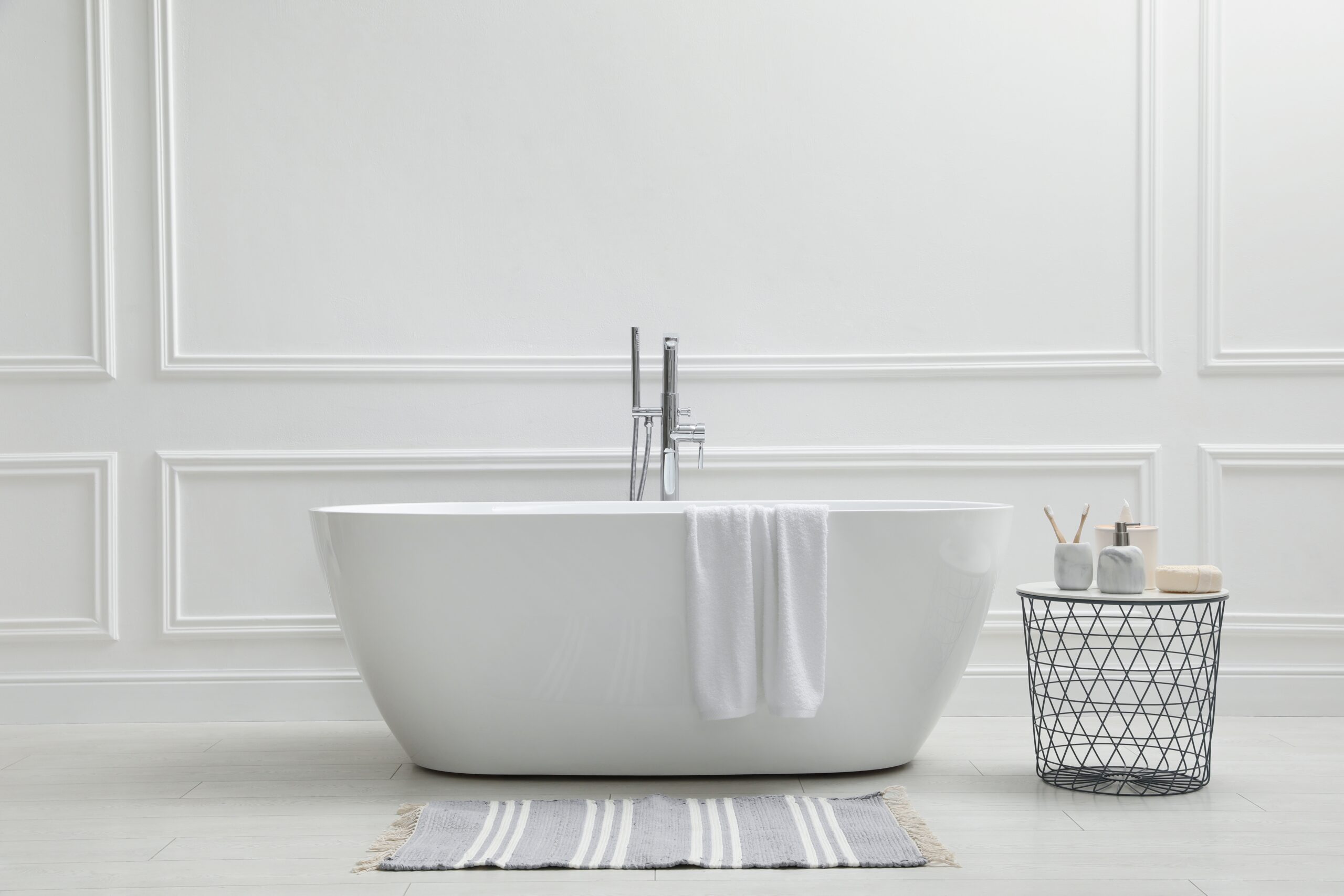
Bathtub refinishing in Shavano Park, Texas
Bathtub Refinishing is the art of restoring your old, battered, and worn bathtub to its original luster and beauty. Reglazing can save you as much as 90% over the cost of replacing your old bathtub, even if all you are needing is a change of color to update and beautify your bathrooms.

Tile Reglazing in Shavano Park, Texas

Sink Refinishing in Shavano Park, Texas
Sink Reglazing returns your mounted kitchen and bathroom single or double basined sinks to their original beautiful shine. There’s really nothing that fills a room with warmth like a newly minted old style sink. Drain boarded farm sinks, pedestal sinks, wall mounted bathroom sinks, etc. can all be made brand new.
We use a dual primer system developed through decades of lab and in the field testing, creating a strong bond between your existing fixtures and our professional coatings. Paired with our best in the business surface prep process, your refinished bathroom or kitchen surface cures properly, resists fading, and is built to last.
As senior members of the Professional Bathtub Refinishers Association (PBRA), our extended team brings over 300 years of combined refinishing experience to every residential and commercial project. Every job includes a 5-year written warranty, giving you confidence and peace of mind.
Whether you call it bathtub refinishing, tile refinishing, tub reglazing, porcelain resurfacing, or bathtub reglazing, we provide consistent, high-quality results at a fraction of replacement costs. View our local work and contact Texas Reglazing today for professional service in. Shavano Park, Texas.
Shavano Park is a city located in Bexar County, Texas, United States. As of the 2020 census, the population was 3,524,[8] an increase over the figure of 3,035 tabulated in 2010. It is part of the San Antonio Metropolitan Statistical Area, despite being much different in terms of demographics and having some of the wealthiest families in Bexar County. Shavano Park is located in north-central Bexar County. It is entirely surrounded by the city of San Antonio; the northern border is formed by the Charles W. Anderson Loop outer beltway around San Antonio. Despite lying in the far southeastern reaches of the Texas Hill Country, Shavano Park's terrain is flat to gently rolling. Most of the city is between 950 and 1,000 feet above sea level, which contrasts sharply with neighborhoods just north of Anderson Loop, where hills can rise 200 feet in a short distance. Some areas of San Antonio farther south have greater elevation variation despite not technically lying in the Hill Country. The east side of town forms a plateau looking over a cliff descending fifty feet or more. This cliff marks the boundary with San Antonio. Shavano Park, also known as Shavano, is a suburb on Farm Road 1535 twelve miles north of downtown San Antonio in northern Bexar County. Early on, the site had a store operated by A. De Zavala, who became postmaster when the Shavano post office opened in 1881. Shavano became a small station and switch on the San Antonio and Aransas Pass Railway in 1884, and that year the community shipped corn, cotton, hay, and livestock. At that time daily stages operated between Shavano, San Antonio, and Boerne, and the town had a saloon, a carpenter, a grocer, and fifty residents. In 1890 Shavano included a church, a district school, and a population of eighty, and by 1892 its population had grown to 100, where it remained in 1896. After that the community declined. The post office closed in 1903, after which mail was delivered from San Antonio. The site of the later township of Shavano Park became a part of the Stowers Ranch (see GEORGE ARTHUR STOWERS). It was then sold in 1947 to Wallace Rogers and Sons for residential development. The city of Shavano Park was incorporated on June 19, 1956. In 1961 its population was 343, and by 1966 it was 585. Growth continued through the 1970s, and in 1975 there were 881 residents. The population of Shavano Park was reported as 1,448 in 1980 and 1,775 in 1990.